
People mix up primer and foundation all the time. They assume both do identical work. That is wrong. When you search for differences between primer and foundation makeup, you need to know they have separate jobs in your makeup routine. Getting this right changes how your makeup looks from morning to night.
This guide breaks down the actual differences. You will learn the correct order to apply them. You will know if you need one or both. We talk about the best all-in-one options too. When you finish reading, you will know what works for your skin.
What Is Makeup Primer?
You put primer on your face before foundation. It makes a smooth base for your makeup. Picture paint primer on a wall. You put it down first so paint spreads better.
Primer fills fine lines and tiny pores. It helps foundation grip your skin. Skip primer and your makeup slides off or looks uneven. Put primer on and your foundation holds longer and looks smoother.
Different primers exist for different needs. Some help dry skin. Some help oily skin. Some blur pores. Some add shine. Some keep oil down all day. Match your primer to your skin type.
Primer comes in several forms. Tubes, pumps, and sticks all exist. Some look clear. Some have color. Most primer formulas feel light and spread without work. You need very little. A pea-sized amount covers your whole face.
What Is Foundation?
Foundation goes on after primer. It balances your skin tone. Foundation covers redness, dark spots, and uneven patches. It gives your face one even color.
Foundation offers different coverage levels. Sheer coverage looks natural. Medium coverage hides small problems. Full coverage hides everything. Pick based on what needs hiding and how natural you want to look.
Foundation types fit different skin needs. Liquid foundation fits most people. Powder foundation fits oily skin well. Cream foundation fits dry skin well. Stick foundation builds coverage easily.
Foundation shades match your skin tone. Test foundation on your jawline. The right shade blends with your neck. Too light looks fake. Too dark looks dirty. Your foundation should vanish into your skin.
Read More: Natural Skin Care Homemade Tips for Glowing Skin
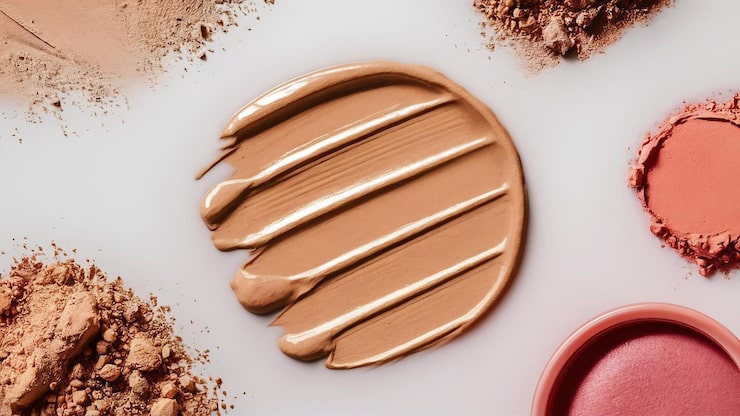
Key Differences Between Primer and Foundation
This is what makes them different:
| Feature | Primer | Foundation |
|---|---|---|
| Purpose | Makes smooth base, helps makeup stick | Balances skin tone, hides problems |
| When to Apply | First, before foundation | Second, after primer |
| Coverage | No coverage, clear or very sheer | Sheer to full coverage |
| Color | Clear or lightly tinted | Matches your skin tone |
| Main Job | Gets skin ready for makeup | Gives color and coverage |
| Longevity Help | Makes makeup stay longer | Gives the color you see |
| Skin Benefits | Fills pores, controls oil or adds moisture | Some have SPF or skincare ingredients |
Primer does not give color. Foundation gives color. Primer makes foundation work better. Foundation gives you the finish you see looking back at yourself.
You can wear primer without foundation. Some people just want smooth skin. You cannot wear foundation first and expect primer to work. Primer helps foundation do its best work.
Primer or Foundation: Which Comes First?
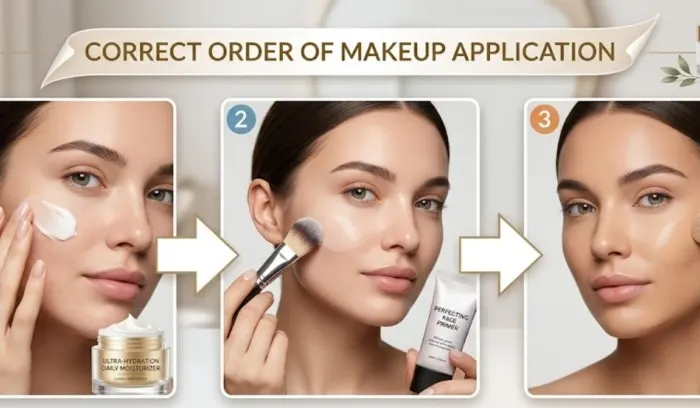
Primer goes on first. This order never changes. Here is your makeup routine step by step:
- Wash your face
- Put on moisturizer
- Wait for moisturizer to soak in
- Put on primer
- Wait 30 seconds for primer to set
- Put on foundation
- Add concealer if you need it
- Set with powder
Put foundation on first and primer mixes with it. Your makeup moves around. It looks streaky. It does not hold. Order matters because each product needs to set on what is already on your skin.
Primer needs clean skin to stick. Foundation needs primer to stick. This layering makes makeup that holds all day.
Do You Need Both Primer and Foundation?
You do not always need both. It comes down to what you want:
Use both when:
- You want full coverage
- You have events or long days ahead
- Your makeup keeps coming off
- You see pores you want to hide
- You want makeup to last 8+ hours
Use foundation only when:
- You are short on time
- You want simple everyday makeup
- Your skin already looks good
- You wear makeup just a few hours
Use primer only when:
- You want bare skin but smoother
- You skip foundation but want pores hidden
- You wear tinted moisturizer instead of foundation
- You want makeup to last without heavy coverage
Many people think they must use both. They do not. If your skin looks good with just foundation, skip primer. If you love your natural skin but want pores less visible, wear primer alone.
Best Primer Foundation Concealer All in One Products
Some products mix primer, foundation, and concealer. These save time. They work well for daily wear. Here is what to know about all-in-one products:
All-in-one products give light to medium coverage. They are not for full coverage needs. They work great for normal days, work, school, or casual hangouts.
Benefits of all-in-one products:
- Save time getting ready
- Fewer products to buy
- Lighter feel on skin
- Harder to mess up
- Good for beginners
Downsides of all-in-one products:
- Less coverage than separate products
- You cannot adjust each step
- May not last as long as layered makeup
- Shade ranges sometimes limited
When picking an all-in-one product, check the finish. Some give matte finish. Some give dewy finish. Pick what fits your skin type. Oily skin works better with matte. Dry skin works better with dewy.
Look for skincare ingredients too. Many all-in-one products now have hyaluronic acid, vitamin C, or SPF. These add benefits while you wear makeup.
How to Choose the Right Primer for Your Skin Type?
Your skin type tells you which primer works:
For Oily Skin:
Pick oil-free primer. Look for "matte" or "oil-control" on the bottle. These primers soak up oil. They stop your face from getting shiny. Gel-based primers work well for oily skin.
For Dry Skin:
Pick hydrating primer. Look for "moisturizing" or "dewy" on the bottle. These primers add moisture. They stop foundation from looking thick and cakey. Cream-based primers work well for dry skin.
For Combination Skin:
Pick balancing primer. You can put different primers on different areas. Use matte primer on your T-zone. Use hydrating primer on your cheeks. Or pick one primer that does both.
For Sensitive Skin:
Pick fragrance-free primer. Look for simple ingredients. Avoid alcohol and harsh stuff. Mineral-based primers tend to be gentler.
For Large Pores:
Pick pore-blurring primer. These have silicone that fills pores. They make a smooth surface. Put it only where you need it, like your nose and cheeks.
For Dull Skin:
Pick illuminating primer. These have light-reflecting bits. They give your skin glow under foundation. They make your skin look brighter.
How to Apply Primer the Right Way?
- Put primer on after moisturizer. Wait for your moisturizer to absorb first. Put primer on wet skin and it pills and balls up.
- Use a pea-sized amount for your whole face. More is not better. Too much primer makes makeup slide. Stick with pea-sized.
- Start from the center of your face. Blend outward. Use your fingers, a brush, or a sponge. Fingers work best because body heat helps primer soak in.
- Focus on problem areas. Put more primer where you have large pores, fine lines, or oily patches. Your T-zone usually needs more than your cheeks.
- Wait 30 seconds before foundation. This lets primer set. Put foundation on too soon and the products mix. They will not work right.
You May Also Read: Understanding the Benefits of Medical Grade Skincare
How to Apply Foundation After Primer?
- Put foundation on after primer sets. Use a little at a time. Build coverage where you need it.
- Start from the center of your face. Blend outward toward your hairline and jaw. Do not forget your neck. Blend foundation into your neck to avoid a color line.
- Use a damp sponge for natural finish. Use a brush for more coverage. Use your fingers for speed. Each tool gives a different look.
- Blend in downward strokes. This follows your hair growth. It stops foundation from catching on facial hair.
- Build coverage slowly. You can always add more. You cannot take away excess without starting over. Thin layers look more natural than one thick layer.
- Set your foundation with powder if you have oily skin. Skip powder if you have dry skin. Powder can make dry skin look patchy.
Common Mistakes People Make With Primer and Foundation
Mistake 1: Skipping primer
Primer makes makeup last longer. Without it, foundation wears off faster. Your makeup does not look as smooth.
Mistake 2: Using too much primer
More primer does not mean better results. Too much makes makeup slide. Use a pea-sized amount.
Mistake 3: Wrong order
Foundation first, primer second does not work. Primer must go first. This is not negotiable if you want good results.
Mistake 4: Wrong primer for skin type
Oily skin needs oil-free primer. Dry skin needs hydrating primer. Using the wrong type makes your skin worse.
Mistake 5: Wrong foundation shade
Test foundation on your jawline. Check it in natural light. Too light or too dark looks obvious.
Mistake 6: Not waiting between steps
Rushing makes products mix. Wait for moisturizer, primer, and concealer to set before the next step.
Mistake 7: Ignoring neck and ears
Blend foundation into your neck. Your face and neck should match. Ears often get missed too.
Final Thoughts
Primer and foundation do different jobs. Primer prepares your skin. Foundation gives color and coverage. Primer goes first. Foundation goes second.
You do not need both every time. Use both for long days or special events. Use one or the other for everyday wear. Pick what fits your needs.
Choose primer for your skin type. Choose foundation for your coverage needs. Apply them in the right order. Wait between steps. These small steps make big differences.
All-in-one products work well for quick routines. They combine primer, foundation, and concealer. They give light coverage. They save time.
Your makeup looks better when you understand what each product does. Primer and foundation work together. When you use them right, your makeup stays put and looks natural all day.
FAQs
1. What is the actual difference between primer and foundation makeup?
Primer goes on bare skin and makes foundation hold better. Foundation adds color and covers redness or dark spots. Primer gives no coverage at all. Foundation covers from light to complete. This is the real differences between primer and foundation makeup that matters.
2. Primer or foundation which is first when I do makeup?
Primer goes on first every time. Foundation goes on second. Put primer down after moisturizer dries. Then add foundation on top. Flip this order and your makeup mixes, looks streaky, and falls off. Remember primer or foundation which is first always.
3. Can primer work if I skip foundation?
Yes. Primer works without foundation. It smooths skin texture and makes pores look smaller. Many people wear only primer on easy days. You get cleaned-up skin without heavy foundation. Your face still looks fresh and natural.
4. What are best primer foundation concealer all in one products to try?
Best primer foundation concealer all in one picks include BB creams, CC creams, and tinted primers with buildable coverage. These save time mixing separate products. They work for work, school, or quick outings. Choose shades that match your neck and skin type.
5. Do I need both primer and foundation daily?
No, not every day. Use both for events, photos, or long days. Use just foundation for fast morning routines. Use just primer when you want minimal makeup. Pick based on your day, not strict rules.